Build a transparent hiking-gear purchase budget
Build an AUD purchase scenario from documented quotes while leaving unknown costs visible and distinguishing borrowed equipment.
Updated:
A budget begins with a defined scope
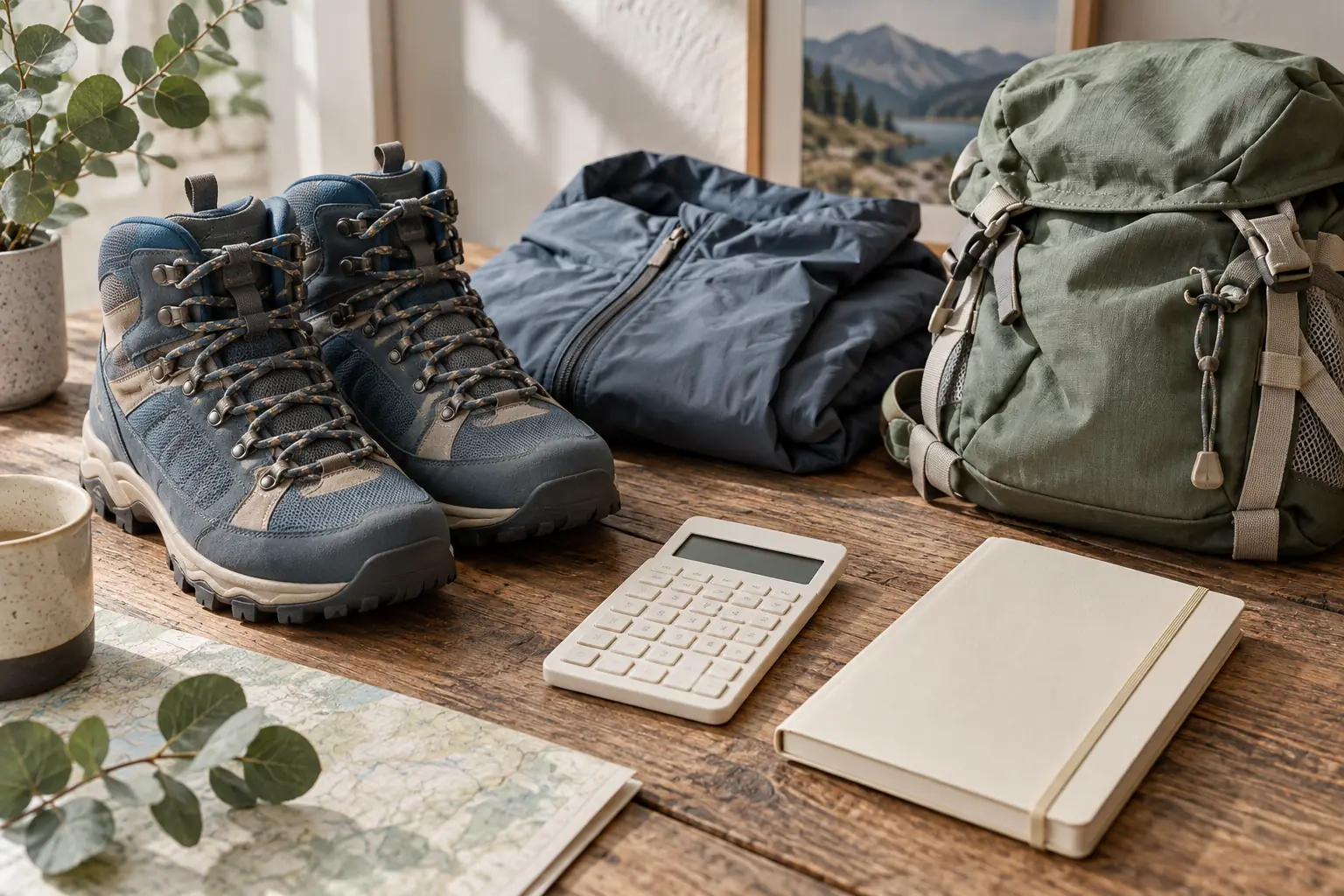
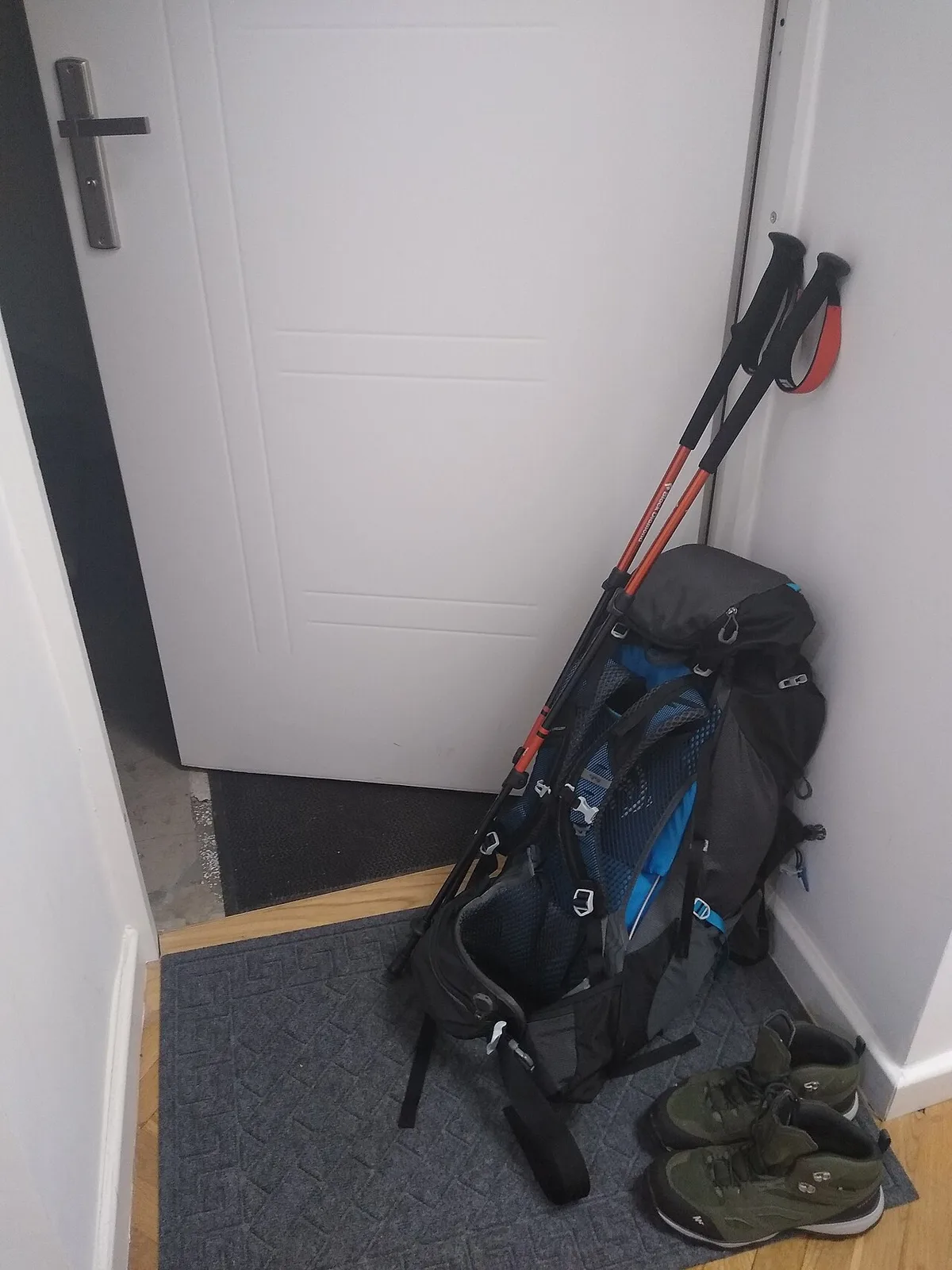
Decide which purchases the record covers before adding numbers. The Gear budget tool contains fields for footwear, a pack, weather layers, and poles or accessories. Those fields are a limited shopping scenario, not a complete equipment list for any walk. Keep items you already own, items you may borrow and items you intend to purchase visibly separate. A zero purchase amount can represent an existing item, but it does not establish that the item is suitable, available or in an appropriate condition.
Connect each amount to an actual quote
For a real comparison, save the exact model, quantity, seller, date and package details behind each amount. Check whether delivery or another relevant charge is included before comparing totals. Avoid entering a guessed market price as though it were a current offer. Bushwalking Victoria's pack guidance, reviewed on 2026-10-27, is background for equipment selection, not a price list. Product fit and documented suitability remain separate enquiries; the budget is simply the place where verified purchase amounts can be brought together.
Make an allowance a deliberate choice
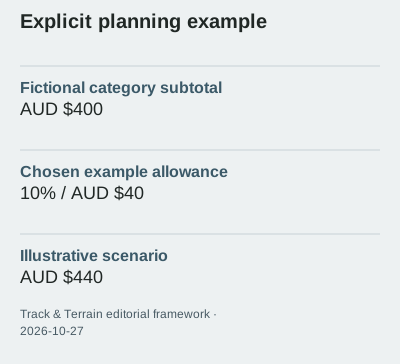
In an explicitly fictional example, category quotes totalling AUD $400 with a chosen 10% allowance produce an additional AUD $40 and a scenario total of AUD $440. These are invented amounts and an illustrative percentage, not a recommended contingency or current Australian prices. The tool lets you choose the percentage because the publication cannot know which extra costs apply. Do not use the allowance to conceal an identifiable unknown charge. Keep that charge listed separately until there is evidence for its amount.
Keep borrowed equipment out of false savings claims
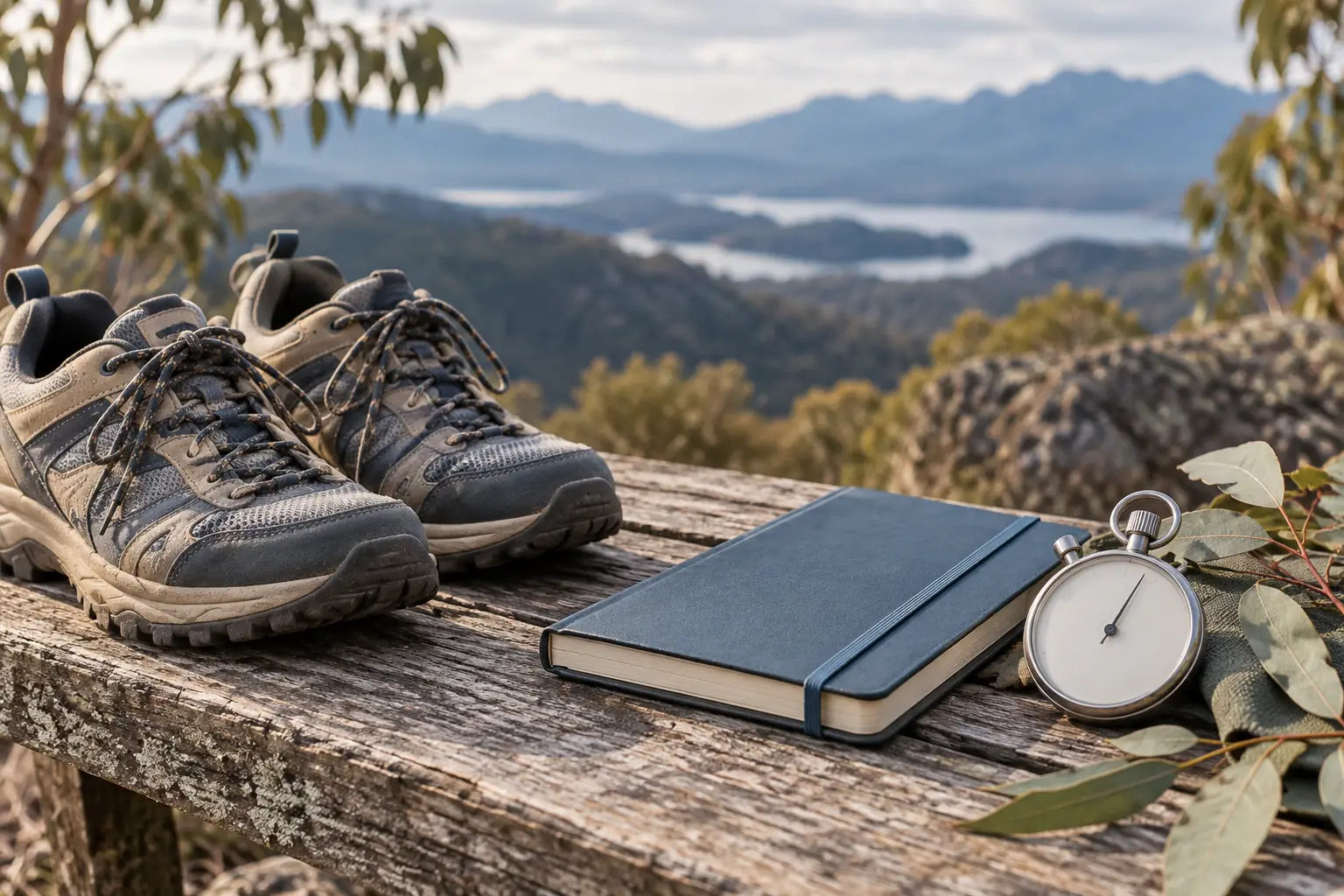
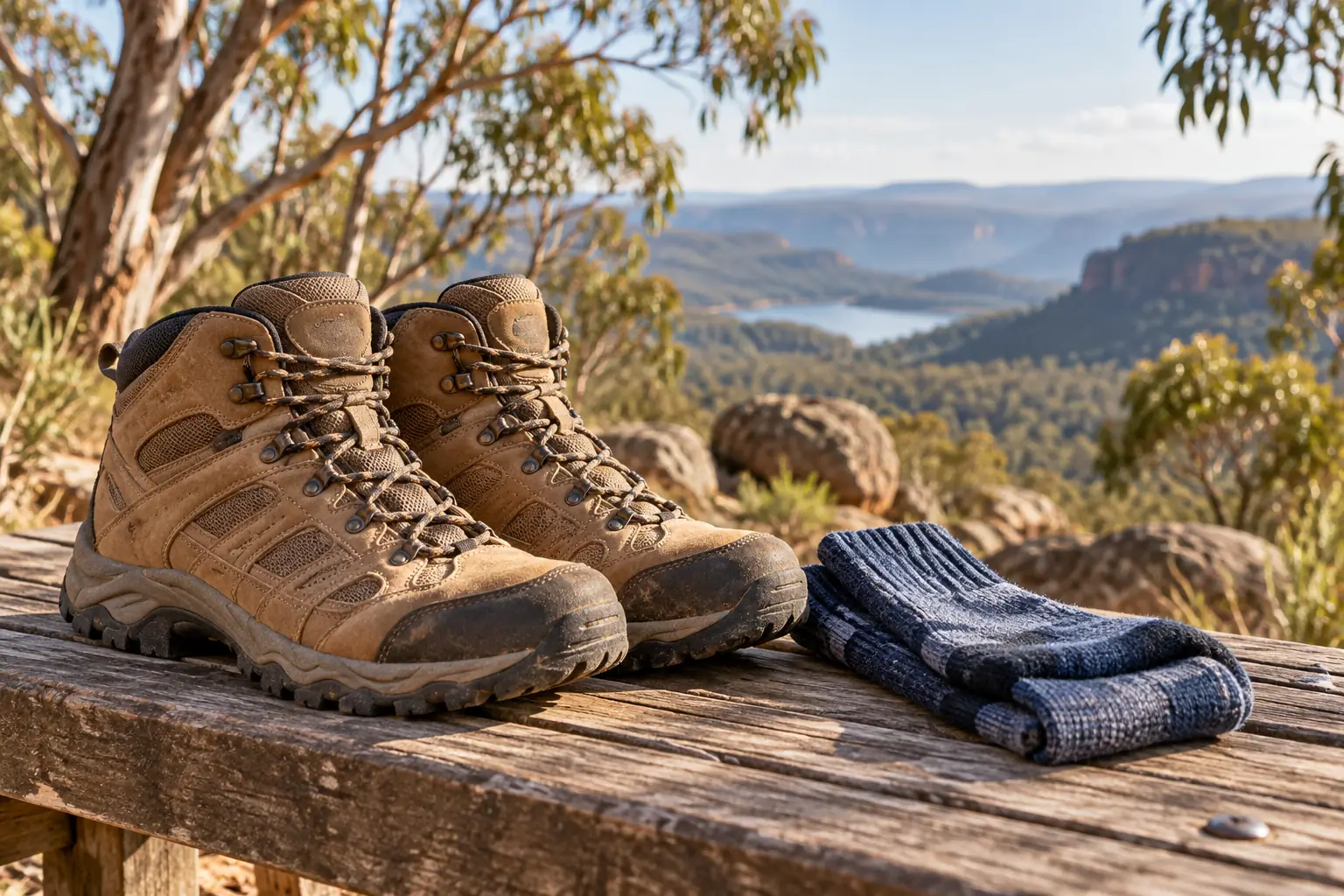
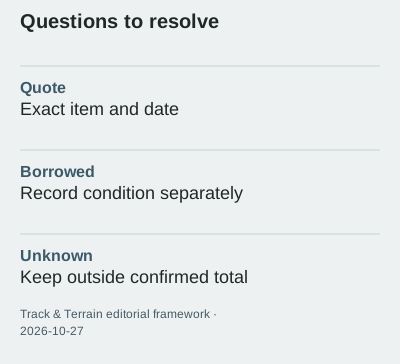
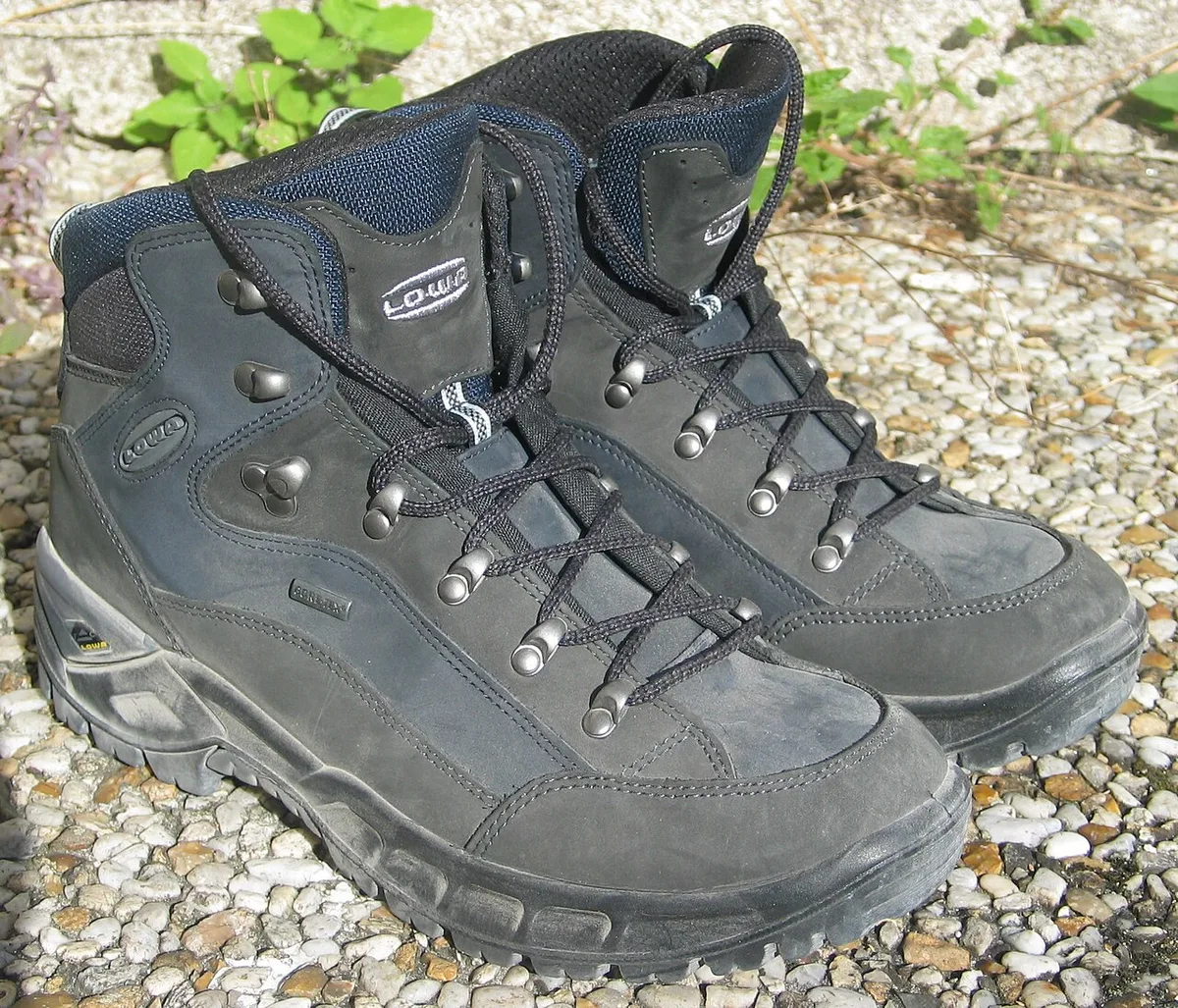
An item available to borrow may have no immediate purchase charge, but that does not establish a saving against an item you would otherwise have bought. Record the actual arrangement and any costs you have confirmed. Keep condition, fit, availability and permission questions alongside it rather than treating a zero as a completed decision. The real photographs show separate equipment forms, not a recommended borrowed kit. No product testing or cost-saving study has been performed for this guide, and the generated image is a generic concept.
Compare scenarios with consistent boundaries
If one scenario includes delivery and another excludes it, the headline totals are not directly equivalent. Align the scope or label the difference clearly. A cheaper total may reflect fewer included items rather than better value. Likewise, a higher total does not demonstrate safer or more appropriate equipment. Keep a short explanation beside each scenario so another person can understand what changed. The calculator adds supplied figures; it does not rank products, assess trip readiness or verify that the quoted items meet your requirements.

Update the record when evidence changes
A quote can expire or a package can change, so retain its date and revisit the actual offer before relying on the budget. Preserve unknowns rather than filling them with convenient assumptions. The final record should show the confirmed subtotal, your chosen allowance and any exclusions. Track & Terrain does not promise a market price or a complete cost estimate. A transparent budget helps you ask better purchasing questions and compare documented scenarios while leaving equipment selection and the wider planning process to their own evidence.