Keep distance and duration arithmetic separate from a trip plan
Calculate average speed from a completed observation while keeping that arithmetic separate from future walking plans.
Updated:
Describe an observation before calculating it
Distance and duration can describe a completed activity, but only if the record makes clear what was measured. Note the source of the distance and whether the duration means total elapsed time or a device's moving-time estimate. Keep those definitions with the values. This guide and the Recorded pace tool perform arithmetic on supplied observations. They do not predict a future arrival time, recommend a walking speed or establish that a person can complete another route under different conditions.
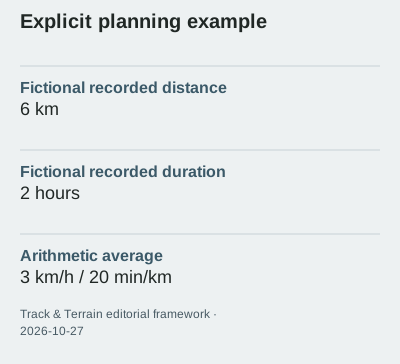
Use compatible units and explicit duration
For a fictional completed observation of 6 km over two hours, division produces an average of 3 km/h. The reciprocal expression is 20 minutes per kilometre. These are invented figures, not a recommended pace. The tool accepts kilometres, whole hours and minutes below sixty, then converts the duration consistently. Check entry mistakes before interpreting the answer. A correct formula cannot repair an inaccurate distance, a paused timer or an unclear definition of what was included in the original observation.
Separate elapsed and moving records
Two duration fields can legitimately describe different things. If a fictional observation has two hours of moving time and two and a half hours elapsed, the difference is thirty minutes, or 20% of the elapsed duration. That percentage does not prescribe break time. Record the definitions instead of choosing the number that looks most impressive. Comparing an elapsed-time result with somebody else's moving-time result can create an apparent performance difference that is actually a difference in how the records were made.
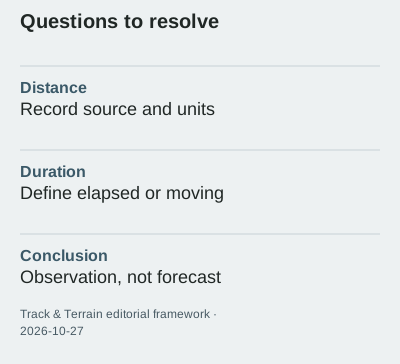
Do not turn the result into a trip promise
NSW National Parks' bushwalking guidance and track-grading information, consulted on 2026-10-27, provide route and preparation context beyond a distance calculation. An earlier average does not capture another route's terrain, current conditions or the needs of a group. Keep the calculation labelled as a completed observation. Track & Terrain does not use it to certify fitness, supply adequacy or a safe itinerary. Where a proposed activity needs experienced judgement, a numerical result is not a substitute for that judgement.
Keep equipment costs in their own column
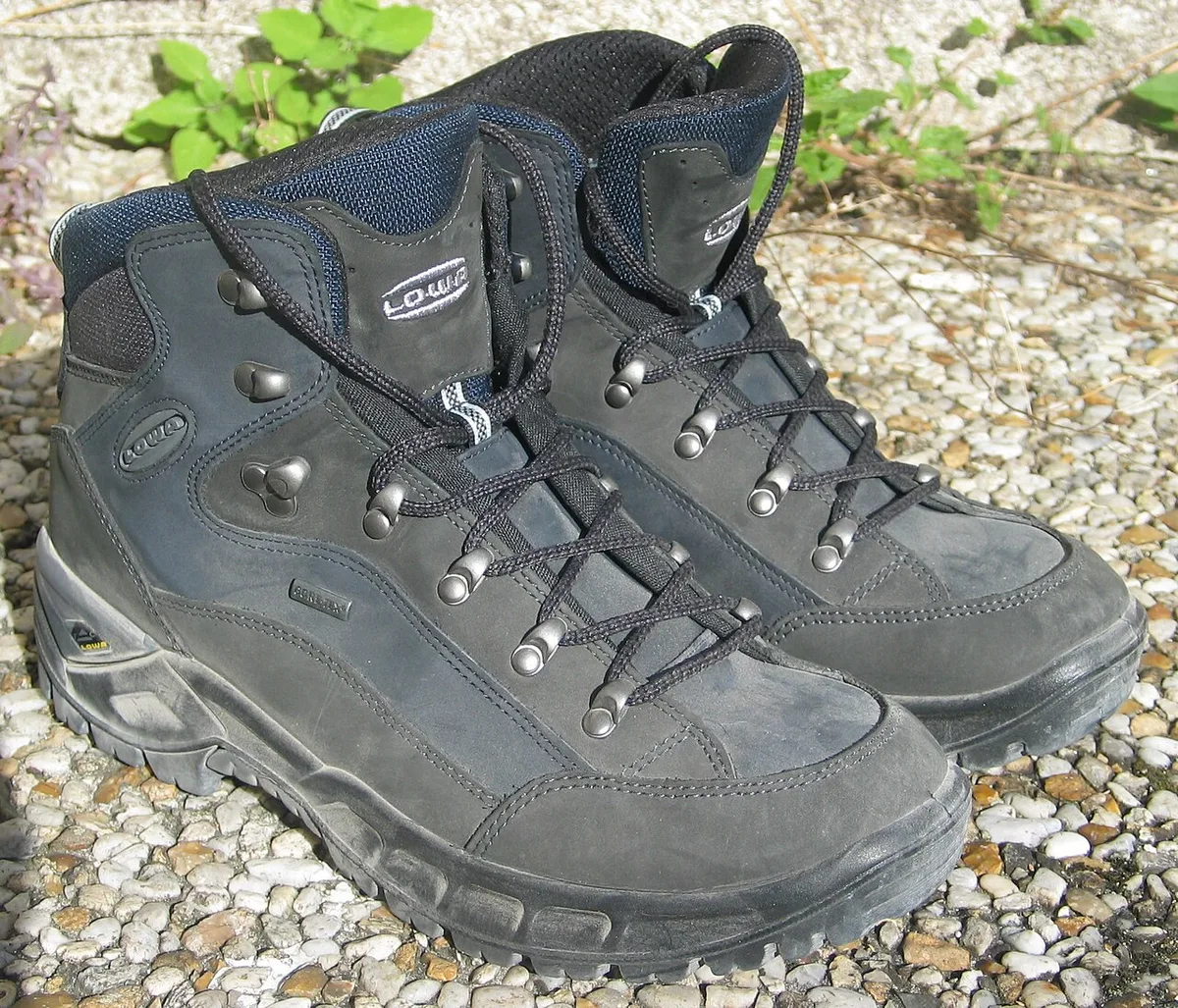
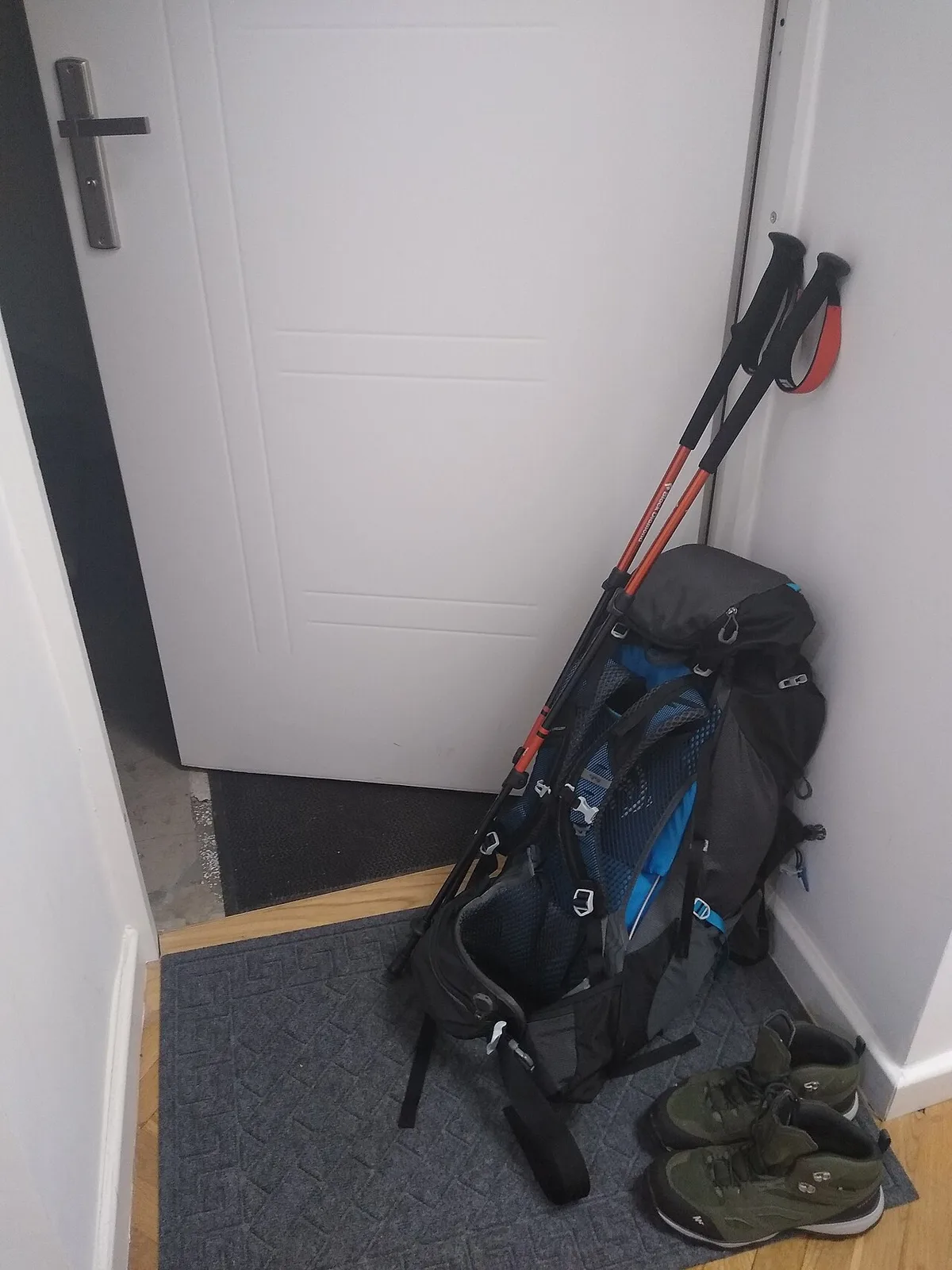
A fictional AUD $35 notebook-and-accessory purchase does not make a distance record more accurate. The amount is invented and illustrates how unrelated costs can accidentally enter a comparison. If you are evaluating a recording device, use its actual documentation and a verified current quote, then keep those purchase questions separate from the observed activity. The real equipment photographs are context images, not evidence that a device or walking setup was tested. The generated lead image is an editorial concept rather than a measured field result.

Save a record that can be understood later
Retain the date, distance source, duration definition, units and any known limitation together. The useful outcome is a transparent observation, including uncertainty, rather than an authoritative-looking speed detached from its context. A later review may help identify questions about how you recorded an activity, but it should not become an automatic forecast. Revisit official route information and appropriate planning advice for each proposed walk. The arithmetic remains a description of the supplied values and nothing more ambitious than that.
NSW National Parks: Bushwalking safety ? NSW National Parks: Walking Track Grading System ?