Keep useful notes during a hiking-footwear fitting
Record the model, socks and observations from a footwear fitting so a later comparison does not rely on memory alone.
Updated:
Give the fitting a clear purpose
Before visiting a shop, decide what you need to learn from the fitting. Bring the walk brief and identify the tasks or conditions described by the official route information. The fitting should help you understand a particular footwear configuration; it cannot certify a complete trip plan. Write a short list of questions in advance so a persuasive display or a familiar brand does not become the whole decision. If you have a health-related concern, seek suitable professional advice rather than expecting a retailer's brief trial to resolve it.
Record the exact setup
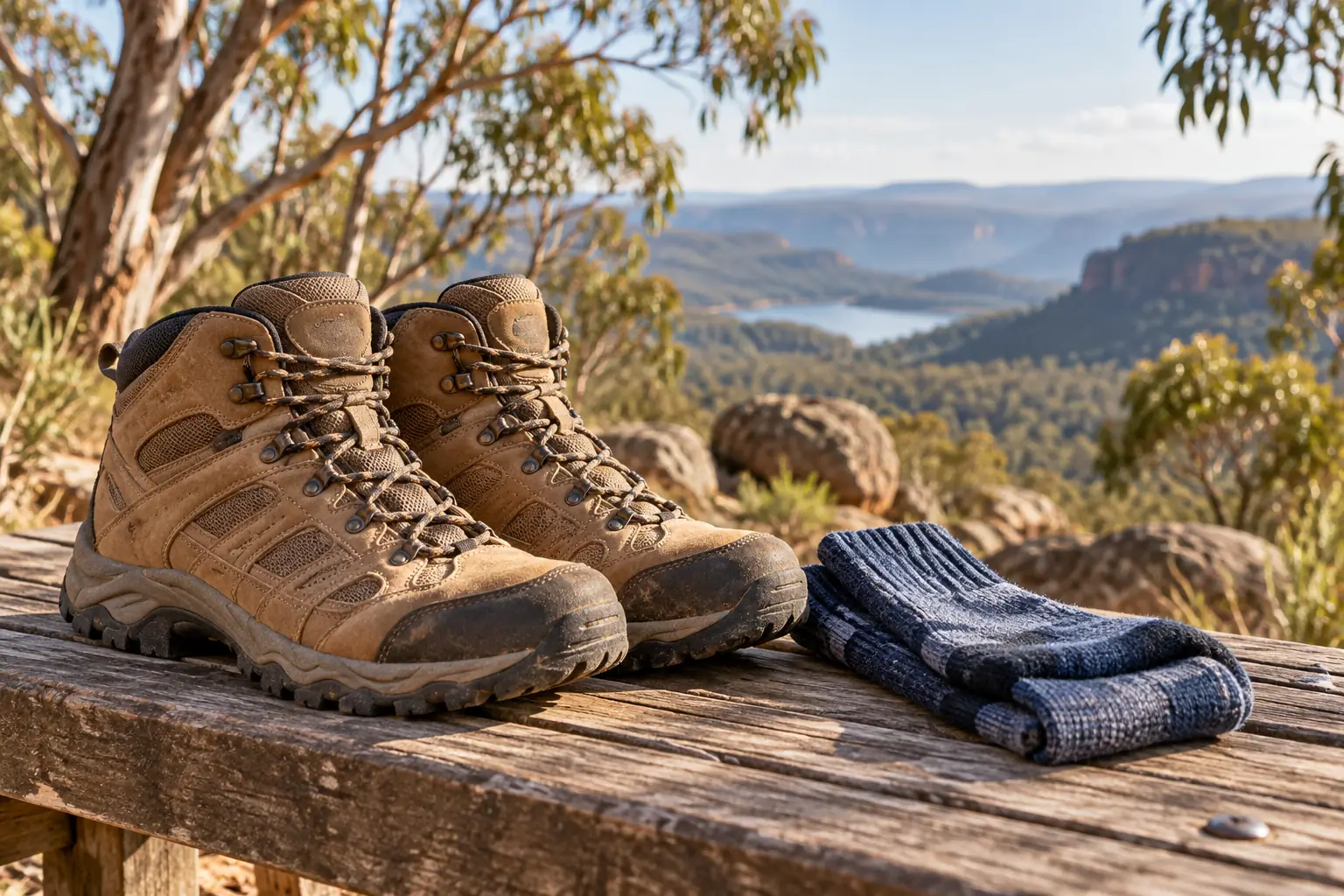
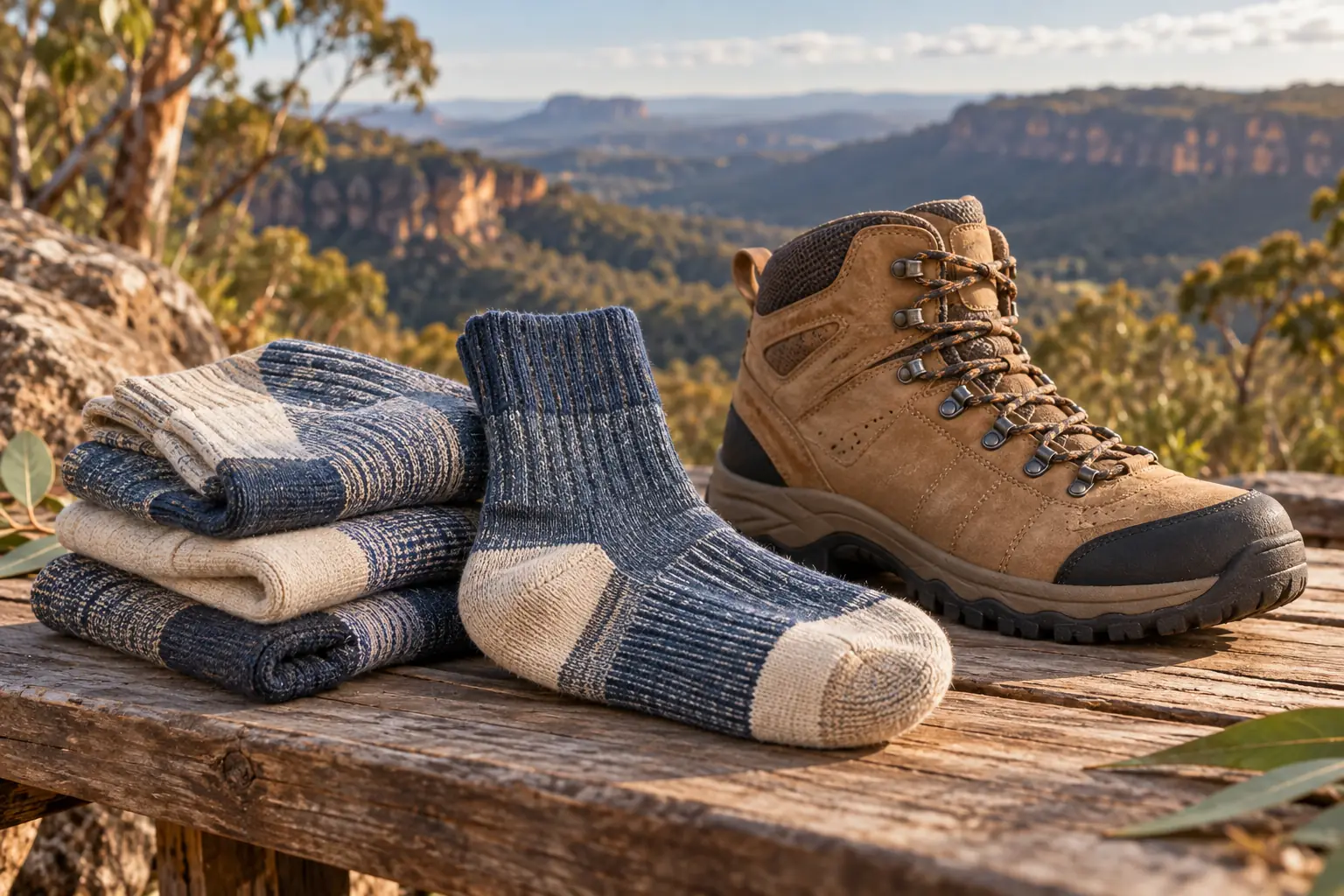
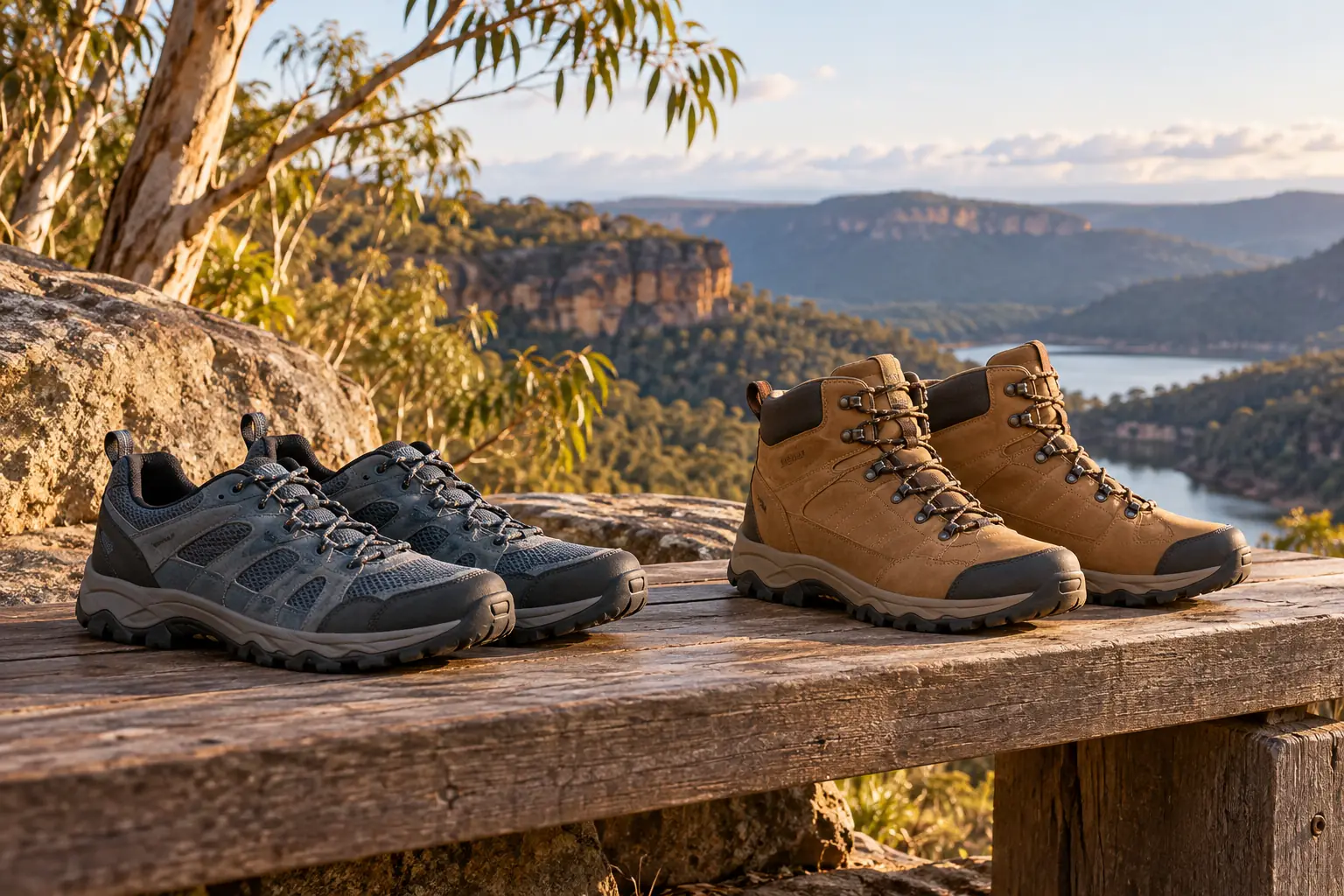
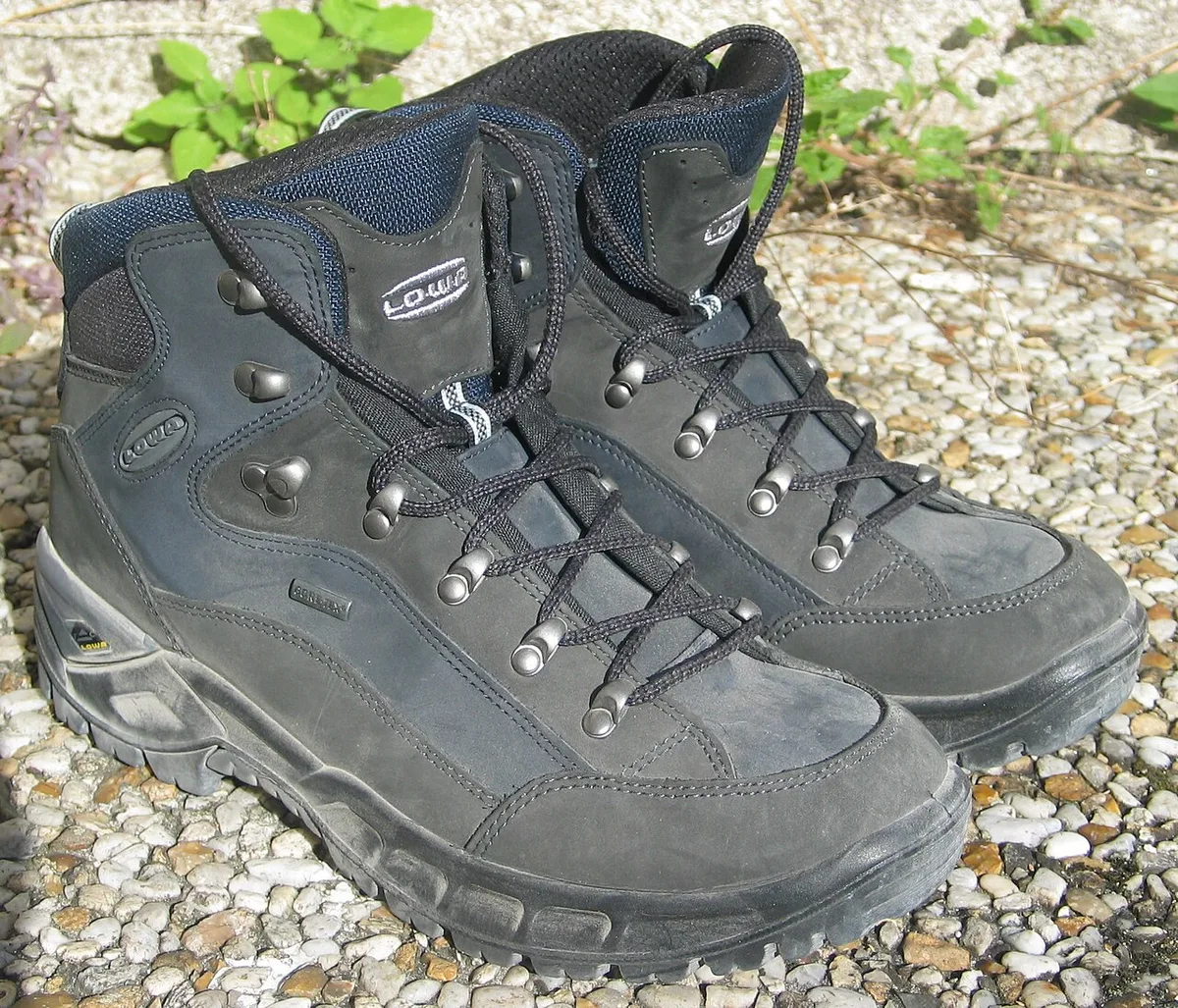
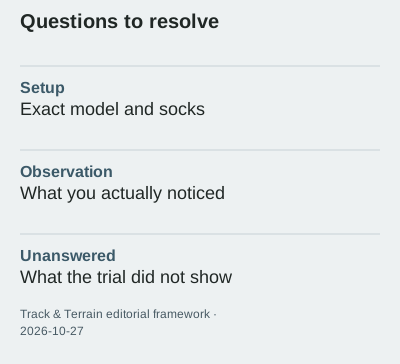
Write down the model name, labelled size and the socks used during the trial. Include any other item that is part of your normal footwear setup, with appropriate professional advice where relevant. Bushwalking Victoria's footwear page, checked on 2026-10-27, notes that sizes can vary between models. Treat that as a reason to preserve the exact configuration rather than copying a size from a previous purchase. The real boot photograph shows cuffs, laces and sole edges, but it cannot tell you how that footwear would fit your own feet.
Describe what happened in plain language
Follow the retailer's instructions for any permitted trial and record the movements you actually tried. Use specific observations instead of a broad score such as perfect fit. Note where an issue appeared and ask the retailer to explain the options within the product's intended use. Do not assume an uncomfortable pressure point will necessarily disappear later. This guide does not diagnose a fitting problem or prescribe a modification. A useful note distinguishes your immediate observation from the seller's explanation and from something that has not yet been established.
Keep the limits of the trial visible
An indoor fitting does not reproduce every terrain, load or duration in the intended walk. Record those differences rather than converting a short observation into a long-distance guarantee. In a fictional checklist with ten questions, eight clear answers leave two open, or 20%. That is a documentation measure, not a comfort score. One essential unanswered question can outweigh several convenient features. Keep a space for follow-up information and avoid treating a completed form as proof that the footwear is suitable for every future activity.
Compare the quoted configuration
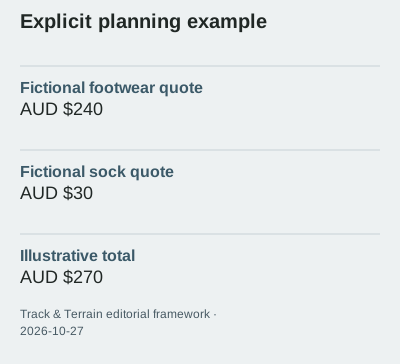
For an explicitly fictional example, footwear at AUD $240 plus socks at AUD $30 creates an AUD $270 purchase scenario. These are invented prices, not current Australian offers or a recommendation to buy both items. Ask whether the configuration tried matches the actual quote and whether a proposed accessory is necessary or optional. Save the seller's current terms and the exact product details. A price comparison between different configurations can still be useful, but the difference should be visible rather than hidden behind a single total.

Use the notes for the next decision
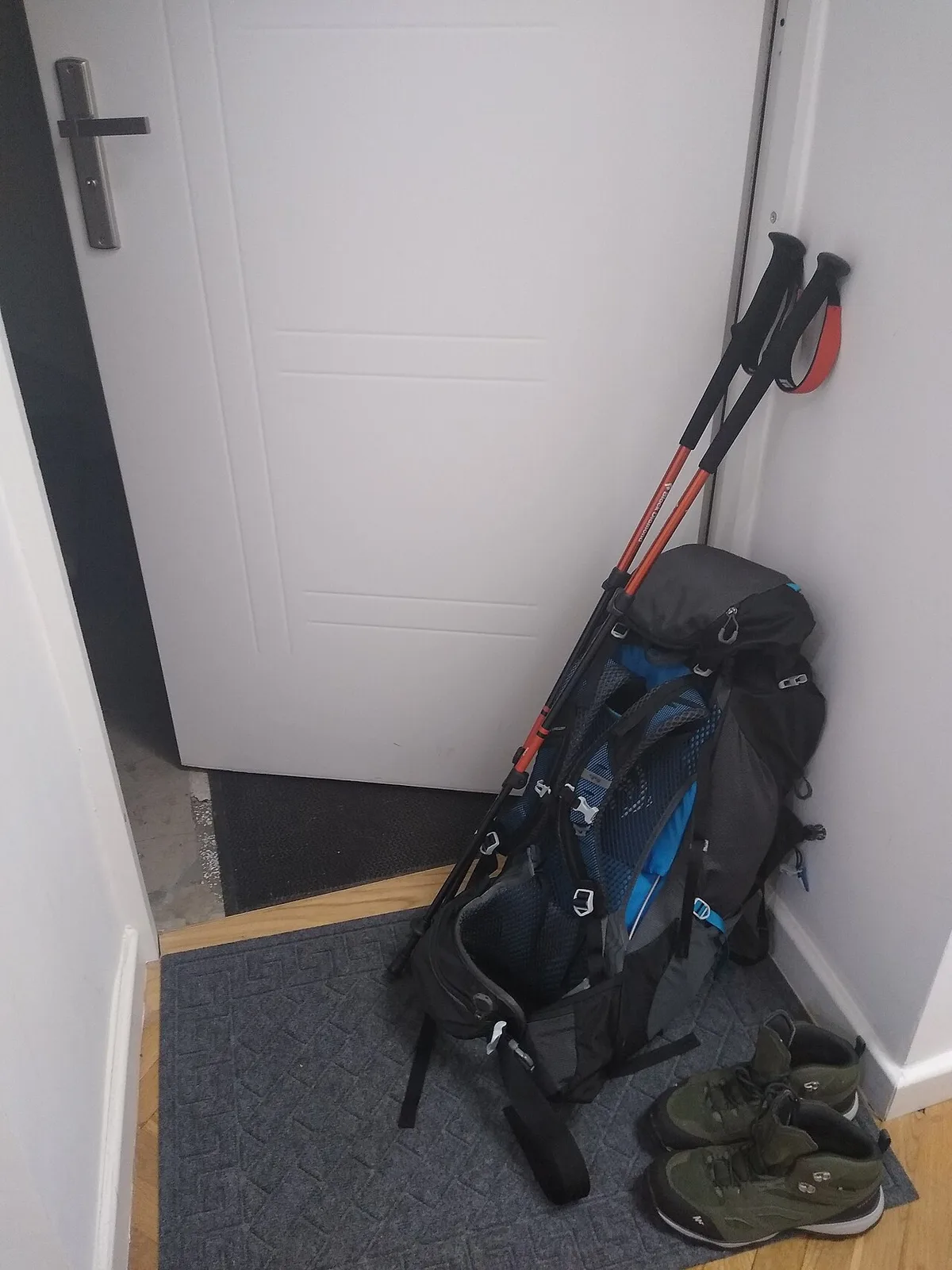
After the visit, summarise what you learned, what remains uncertain and which document or support response could resolve it. Keep the notes dated so later changes in the intended walk or equipment do not get mixed into the original observation. The pack and pole photographs provide context for recording equipment separately, not evidence of a complete kit. The generated lead image is conceptual. Track & Terrain has not performed the fitting or tested the product. Your record is valuable because it preserves the actual basis for your preference and makes reconsideration easier.