Make an after-walk gear note that helps the next purchase
Keep a precise personal gear observation without turning one outing into a product test or universal recommendation.
Updated:
Write what you observed while it is clear
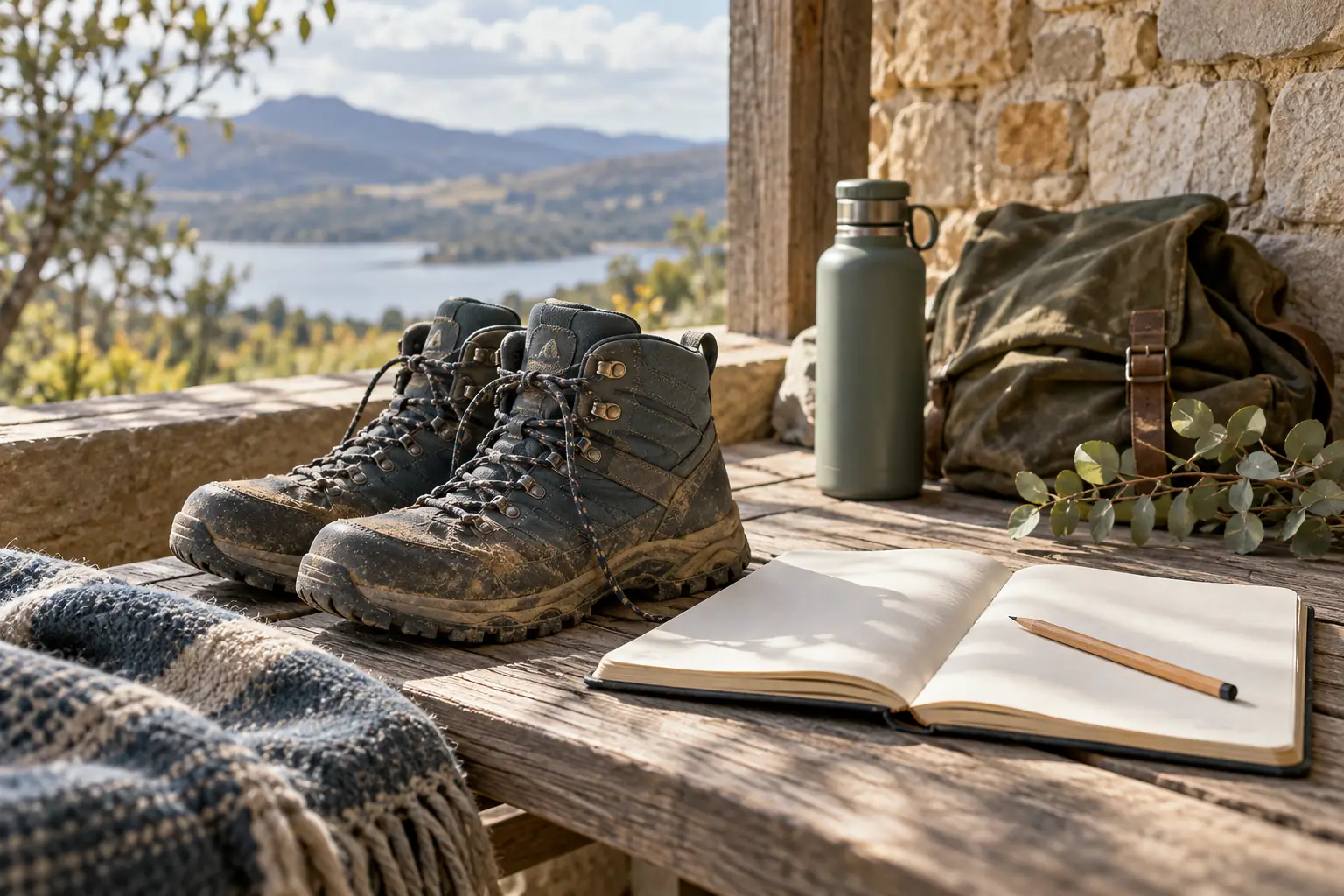
An after-walk note is most useful when it records an event precisely rather than awarding a product a sweeping verdict. Identify the item, its configuration and the circumstances you can actually describe. Keep a personal impression separate from a measured fact and from an explanation you have not verified. This guide is about maintaining a useful record for future enquiries. It does not turn an individual outing into a controlled product test or establish what another person will experience with the same equipment.
Keep the configuration with the observation
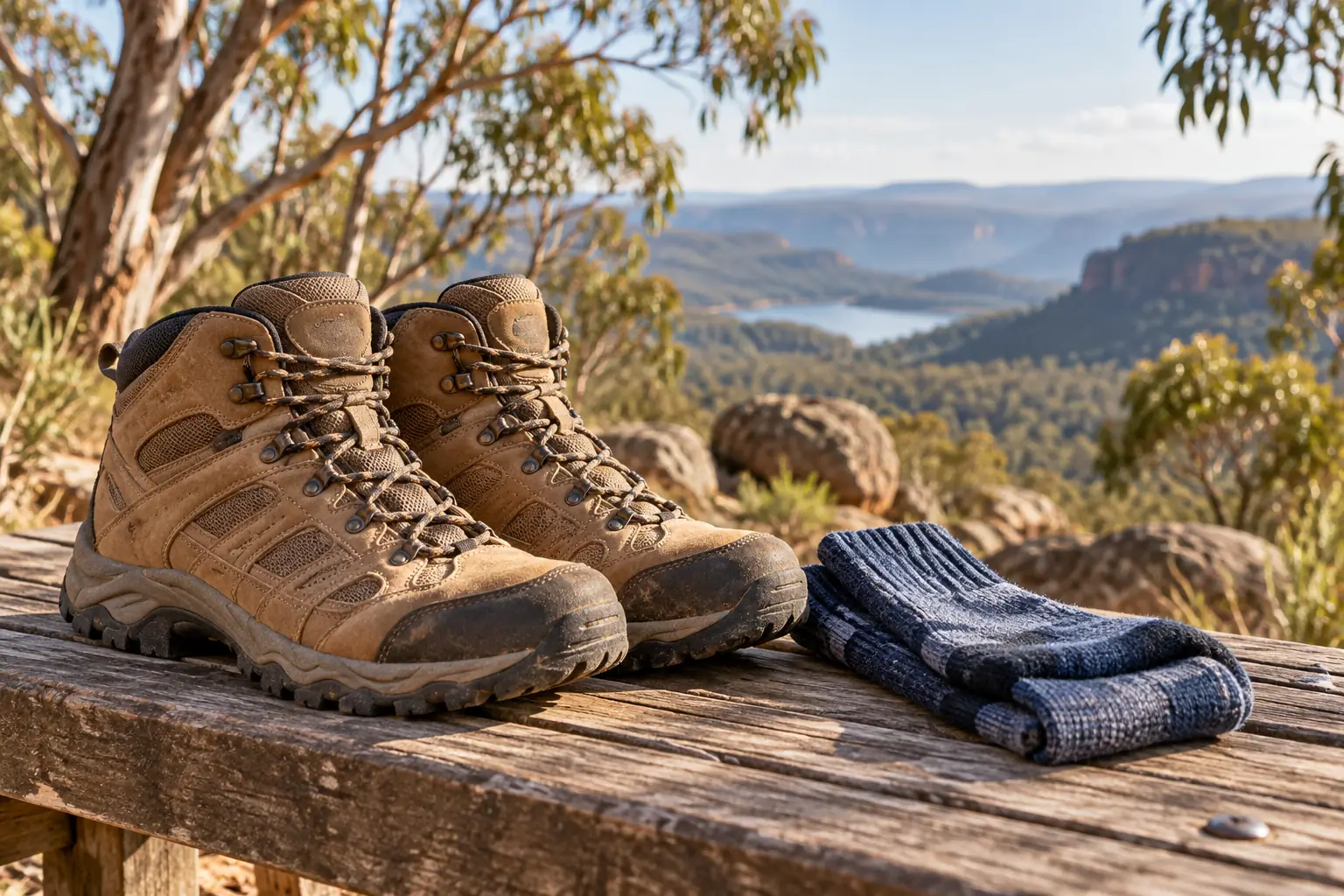
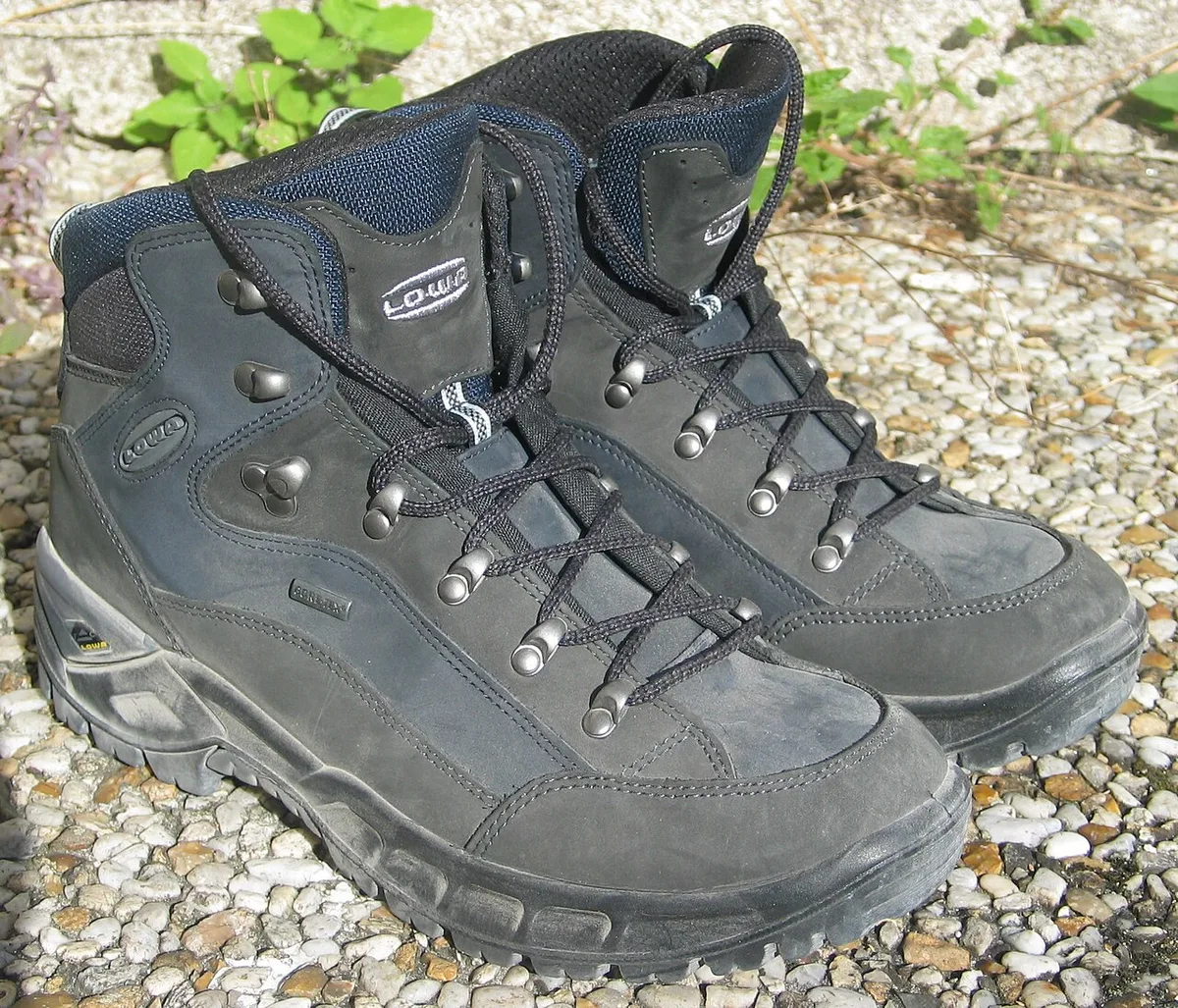
For footwear, record the actual shoes and socks involved rather than remembering only the brand. For a pack, note the configuration and contents you can account for. Bushwalking Victoria's footwear guidance and Kathmandu's garment-care information, consulted on 2026-10-27, provide relevant background for identifying a fitting setup and locating applicable care instructions. They do not diagnose an issue from a short diary entry. If a concern needs professional advice, preserve the observation and seek the appropriate help instead of making an unsupported causal claim.
Distinguish a description from a conclusion
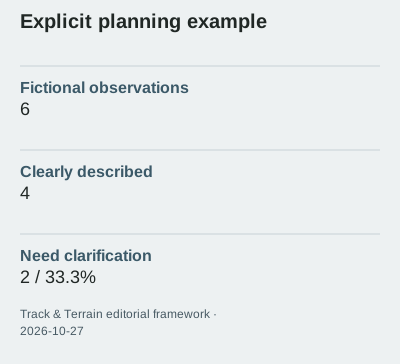
A note that a pocket was difficult for you to reach in a particular setup is more precise than declaring that the pack has a universally bad layout. Record what was happening and which details remain uncertain. In a fictional six-observation record, four clear descriptions leave two needing clarification, or about 33.3%. This percentage concerns the quality of the notes only. It is not a product score, a reliability rate or a measure of how well the equipment will work on another walk.
Use images to identify, not exaggerate
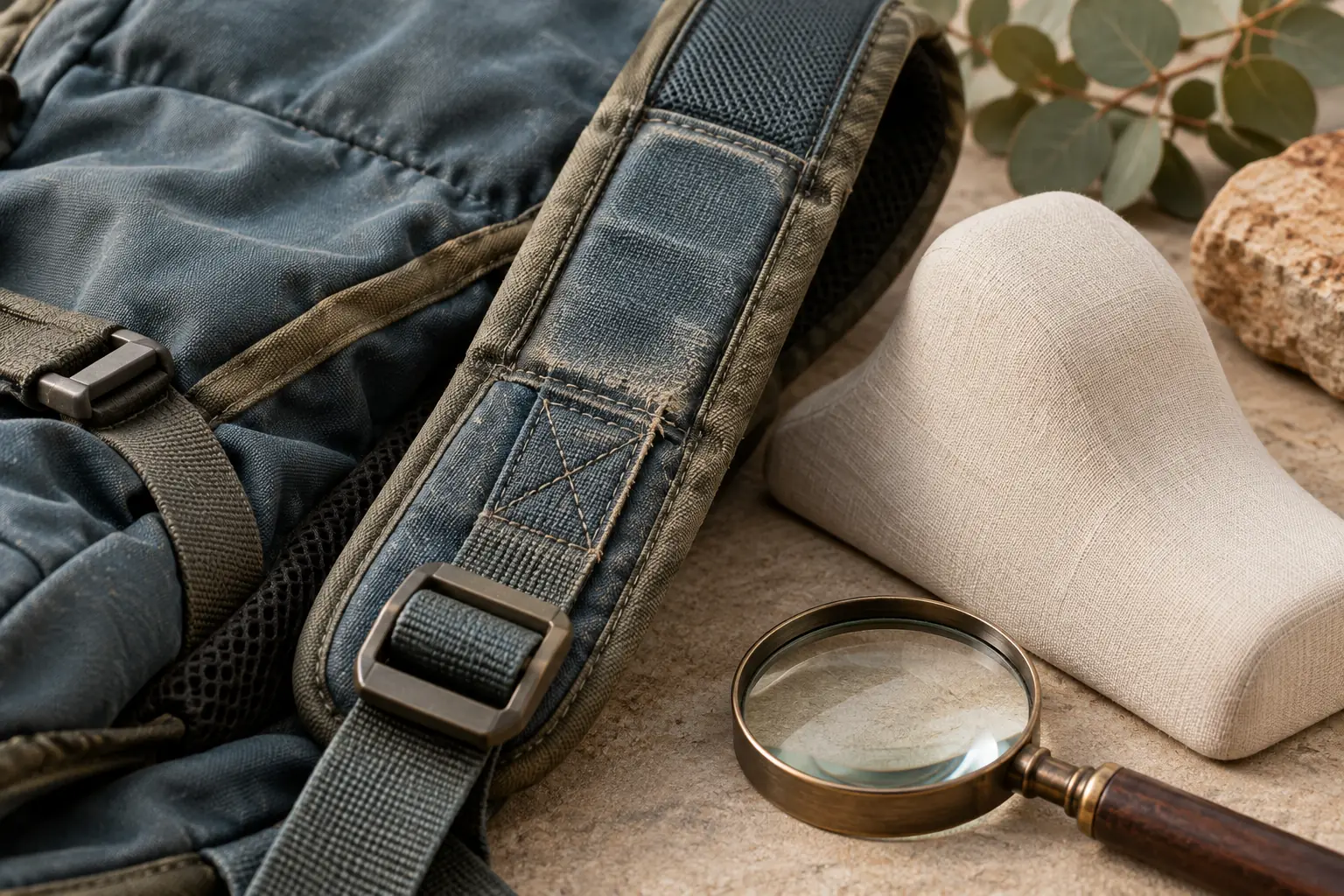
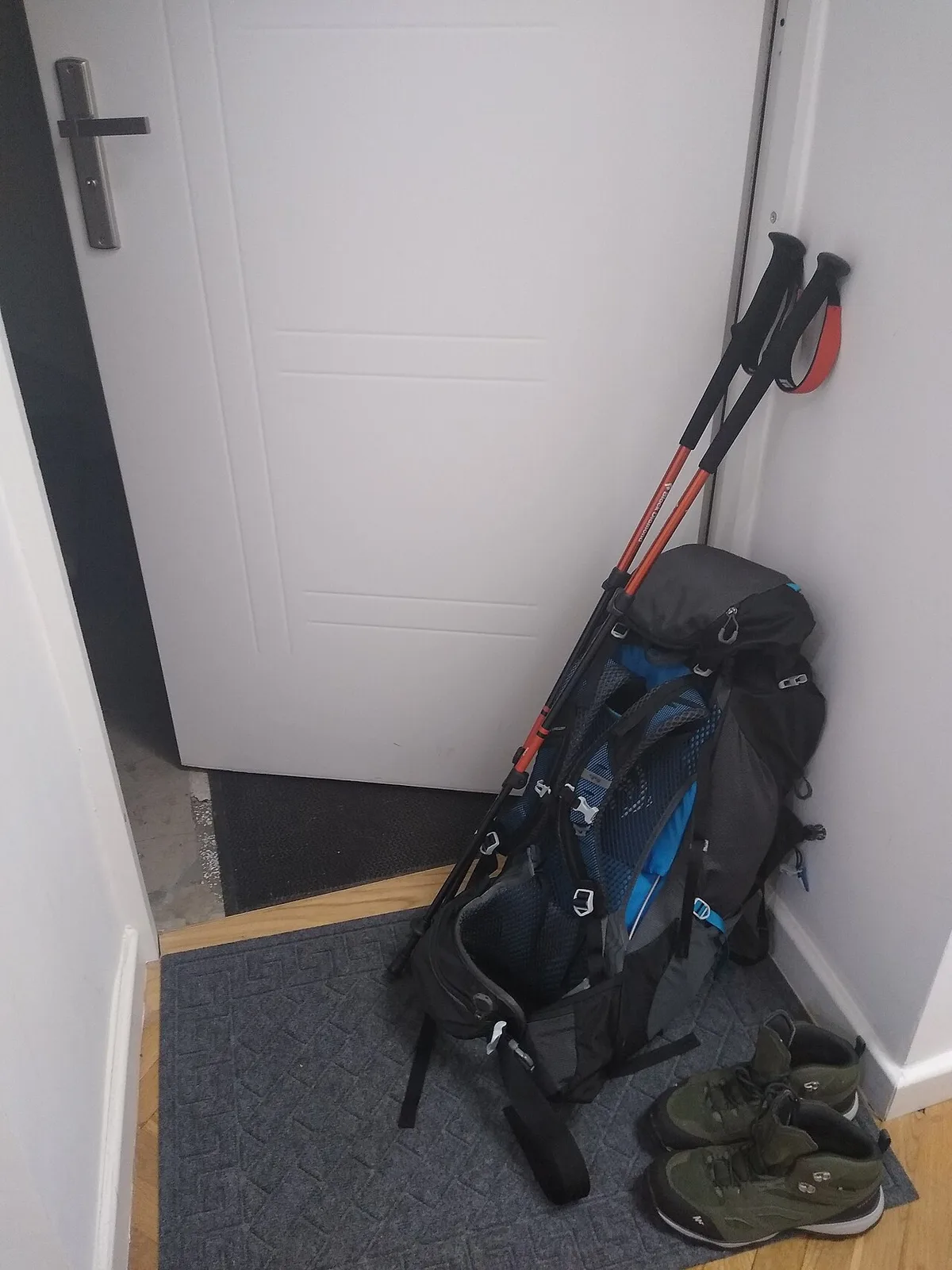
A photograph can help show an item's visible condition or identify a component for support. Keep the original context and avoid presenting a staged image as evidence of use. The real photographs in this article are licensed equipment reference images, not photographs from our own field test. The generated lead image is conceptual. Track & Terrain has not undertaken a comparative trial. Your personal record should likewise distinguish images of the actual event from illustrations or product photographs added later for convenience.
Keep proposed spending provisional
An unresolved observation does not automatically require a purchase. A fictional AUD $25 accessory and AUD $10 delivery would total AUD $35, but those invented figures do not establish that the accessory addresses the issue. First clarify the question, consult the relevant documentation and obtain appropriate advice where needed. Keep any real quote separate from the observation until compatibility and purpose are established. This prevents a diary entry from becoming an unsupported shopping recommendation simply because a product seems to offer an attractive explanation.

Choose a clear next question
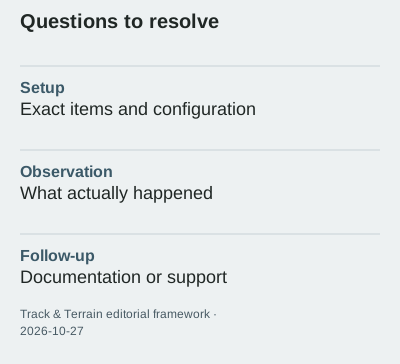
Finish each note with a specific follow-up: find the correct instructions, ask about a component, clarify a fitting configuration or enquire about assessment. Record any response with its date and scope. Do not rewrite uncertainty as certainty just to complete the entry. A later review can reveal which questions have been resolved and which remain open, without pretending to prove a product's lifetime performance. The value of the record lies in its precision and honesty about what was actually observed and what still needs evidence.
Bushwalking Victoria: Footwear and gaiters ? Kathmandu Australia: How to wash a rain jacket ?